Updated on: June 7, 2026
Remember those childhood nights when you would lie on the terrace or sit in the garden, gazing up at the star-studded sky? The stars seemed endless, inviting, and full of mystery. Then life got busy, and those simple moments became rare. If you’ve been missing them, this guide to the best stargazing places in the world is for you. These aren’t just for fellow star lovers who want more than beautiful views—it is for those seeking wonder, perspective, and a chance to slow down beneath a sky full of possibilities.
At a Glance
- Discover the best stargazing places in the world for both adventure and emotional renewal.
- Explore destinations with some of the darkest skies on Earth.
- Learn why stargazing can feel surprisingly calming and restorative.
- Find places ideal for solo travelers, couples, photographers, and nature lovers.
- Discover destinations where the stars are only part of the experience—the feeling they leave behind is what you’ll remember most.
- Get practical tips on the best time to visit and what to expect.
Why Stargazing Is About More Than Stars?
Most people think stargazing is simply about seeing constellations, planets, or the Milky Way. While those sights are undoubtedly breathtaking, the experience often becomes something much more personal.
Standing beneath a vast night sky has a way of putting life into perspective. The emails, deadlines, worries, and endless mental checklists that seem overwhelming during the day suddenly feel smaller. In many ways, stargazing is one of the simplest forms of mindful travel.
That’s one reason why destinations known for dark skies often appeal to travelers seeking peace and reflection. Much like the experiences explored in Nature Therapy Through Travel, these places encourage travelers to slow down, reconnect with nature, and find a sense of calm that’s often missing from everyday life.
1. Lake Tekapo/Takapō, New Zealand
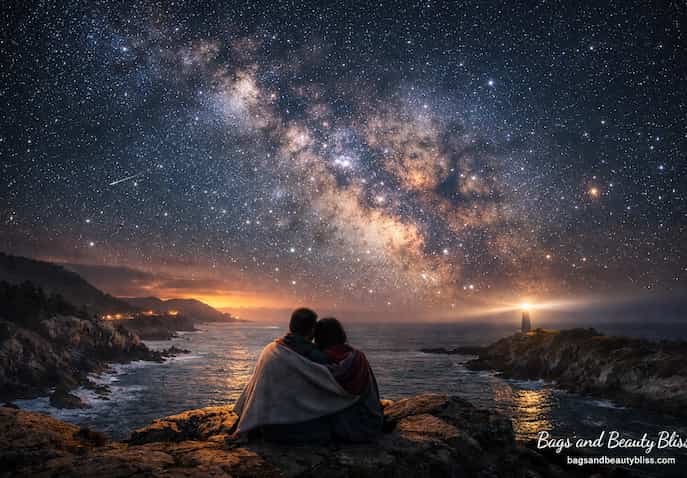
A couple watches the Milky Way over Lake Tekapo’s tranquil shoreline.
Located within the Aoraki Mackenzie International Dark Sky Reserve, Lake Tekapo/Takapō offers some of the clearest night skies on Earth. With minimal light pollution and exceptional Milky Way visibility, it’s widely considered one of the world’s premier stargazing destinations.
Why Is It a Stargazing Delight?
What makes Lake Tekapo extraordinary isn’t just the number of stars visible overhead, but:
- Its location within a certified International Dark Sky Reserve
- Exceptionally dark skies protected by strict light pollution controls
- Outstanding visibility of the Milky Way throughout much of the year
- Crystal-clear views of constellations, planets, and deep-sky objects
- Excellent opportunities for astrophotography
- Professional observatories and guided stargazing experiences
- Stunning reflections of the night sky on the lake’s calm waters
As darkness settles over the region, thousands of stars illuminate the sky above the turquoise lake, creating a scene that feels almost unreal.
Why Visit?
Lake Tekapo offers more than beautiful skies. It offers stillness. Away from crowded cities and constant distractions, visitors often find themselves slowing down and appreciating the simple act of looking up. The destination combines natural beauty with a sense of calm that many travelers rarely experience in everyday life.
If you enjoy destinations that encourage a slower pace of travel, you’ll also love our guide to the best spring destinations in the world, where nature becomes an important part of the journey.
Best Time to Visit
- April to October offers some of the clearest skies
- New moon nights provide the best visibility
- Winter months are especially popular for astrophotography
- Stargazing tours operate throughout the year
2. Atacama Desert, Chile
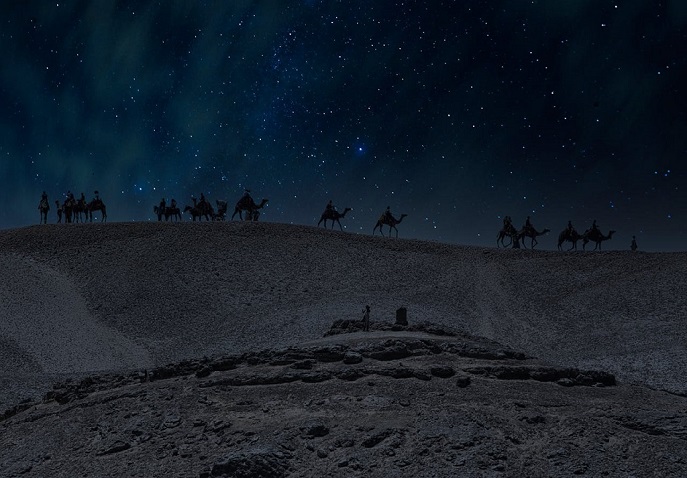
A star-filled sky stretches above a camel caravan in the Atacama Desert.
The Atacama Desert’s high altitude, dry climate, and near-constant clear skies have made it one of the most important astronomy destinations in the world. It is also one of the best places to witness the Milky Way with remarkable clarity.
Why Is It a Stargazing Delight?
The Atacama Desert stands out because of:
- More than 300 clear nights annually
- Extremely dry air that minimizes atmospheric interference
- High altitude viewing conditions
- Some of the world’s leading astronomical observatories
- Incredible visibility of the Milky Way
- Minimal cloud cover throughout the year
- Dark skies largely free from urban light pollution
When night falls, the desert transforms into a natural observatory where the universe feels closer than ever.
Why Visit?
Beyond its stargazing credentials, Atacama offers an experience that feels almost otherworldly. Vast desert landscapes stretch endlessly toward the horizon, creating a sense of isolation that many travelers find surprisingly calming. Looking up at a sky filled with countless stars has a way of making everyday worries feel much smaller.
If you enjoy discovering extraordinary places beyond mainstream itineraries, you’ll love these 25 Lesser-Known Travel Places Worldwide, which offer similarly unforgettable experiences.
Best Time to Visit
- March to November generally provides excellent conditions
- New moon periods offer the darkest skies
- Higher elevations provide even clearer visibility
- Temperatures are more comfortable outside the summer months
3. Hanle, Ladakh, India
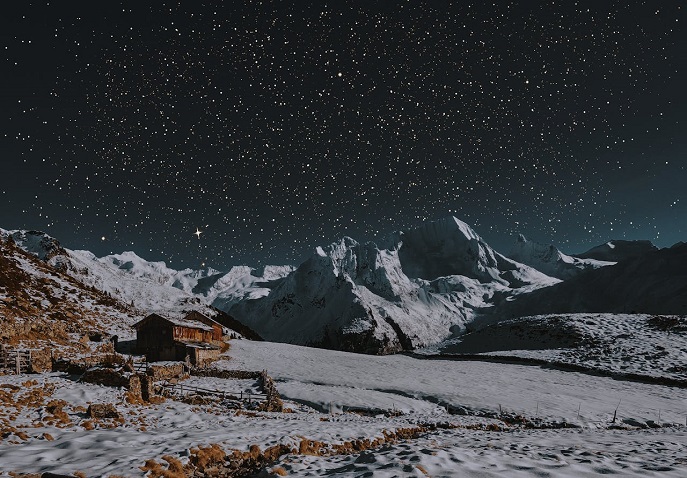
A quiet mountain village in Hanle, Ladakh, rests beneath a clear, star‑filled sky surrounded by snow‑covered peaks.
Hidden in the remote landscapes of Ladakh, Hanle is quickly gaining recognition as one of India’s finest stargazing destinations. Home to one of the country’s highest astronomical observatories, this small village offers incredibly dark skies and breathtaking celestial views.
Why Is It a Stargazing Delight?
Hanle’s growing reputation comes from:
- Extremely low levels of light pollution
- High-altitude location above 4,500 meters
- Spectacular Milky Way visibility
- Excellent meteor shower viewing opportunities
- Crystal-clear mountain skies
- One of India’s most significant astronomical observatories
- A recently established Dark Sky Reserve initiative
The stars here appear brighter, sharper, and far more numerous than most travelers have ever seen.
Why Visit?
Part of Hanle’s charm lies in its remoteness. Reaching it requires effort, but that effort becomes part of the reward. Surrounded by dramatic mountain landscapes and endless open skies, visitors often describe Hanle as a place where they finally feel disconnected from the noise of modern life.
Before heading to Ladakh, make sure you’re prepared for the region’s dry climate with help from the best skincare routine for every travel climate guide.
Best Time to Visit
- May to September offers the most accessible travel conditions
- Summer provides comfortable temperatures
- New moon nights deliver optimal stargazing
- Clear mountain skies are common throughout the season
4. Namib Desert, Namibia
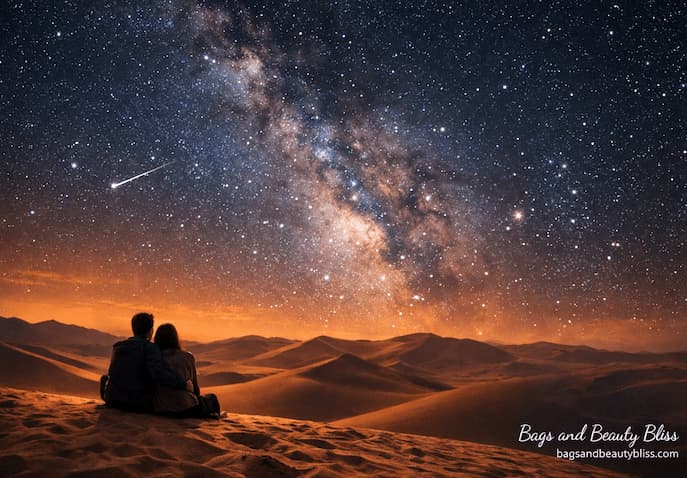
A couple watches the Milky Way from the dunes of the Namib Desert.
The Namib Desert is one of the oldest deserts on Earth and one of Africa’s most remarkable stargazing destinations. Its vast open spaces and sparse population create exceptionally dark skies that reveal the night sky in extraordinary detail.
Why Is It a Stargazing Delight?
Namibia’s night skies are famous because of:
- Some of the darkest skies in Africa
- Extremely low population density
- Virtually no light pollution in many areas
- Brilliant Milky Way visibility
- Outstanding astrophotography opportunities
- Dry climate and frequent clear nights
- Wide-open desert landscapes that maximize visibility
The sheer number of visible stars often surprises even experienced travelers.
Why Visit?
The real gift of Namibia is its silence. Without traffic, crowds, or digital distractions competing for your attention, the desert encourages a slower and more reflective state of mind. Many travelers discover that the experience is as much about reconnecting with themselves as it is about observing the stars.
For longer trips to remote destinations, our guide on How to Build a Travel Capsule Wardrobe can help simplify your packing.
Best Time to Visit
- May to October generally offers the clearest skies
- Winter months provide cooler nighttime temperatures
- Dry conditions improve visibility
- New moon periods are ideal for stargazing
5. Iceland
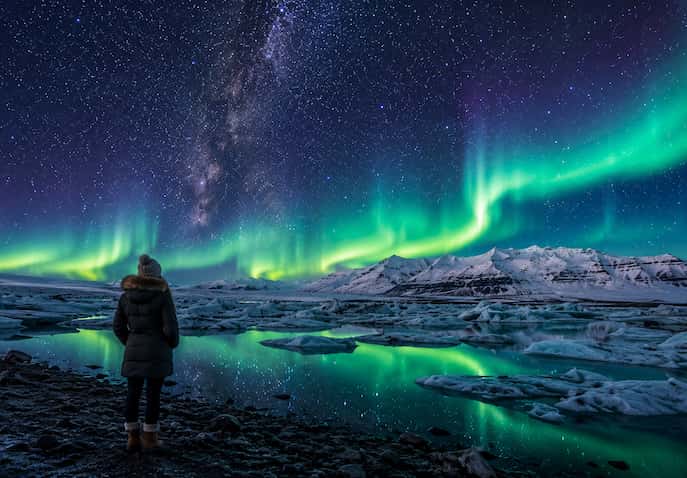
A magical Iceland night as the Aurora Borealis lights up a quiet, snowy landscape under a star-filled sky.
Iceland offers a unique combination of stargazing opportunities and natural phenomena that few destinations can match. During the darker months, visitors can enjoy spectacular night skies while also having the chance to witness the Northern Lights.
Why Is It a Stargazing Delight?
Iceland stands apart because of:
- Opportunities to see both stars and the Aurora Borealis
- Large areas with minimal light pollution
- Dramatic volcanic and coastal landscapes
- Clear winter nights
- Excellent photography conditions
- Numerous remote viewing locations
- Easy access to nature from major towns
Watching the Northern Lights dance across a star-filled sky is an experience many travelers describe as unforgettable.
Why Visit?
Iceland’s appeal goes far beyond astronomy. Waterfalls, glaciers, black-sand beaches, and dramatic landscapes create an atmosphere that encourages reflection and wonder. It’s a destination where nature constantly reminds you how vast and beautiful the world can be.
Travelers seeking meaningful journeys may also enjoy exploring the best women-only travel retreats, which focus on personal growth, wellness, and self-discovery.
Best Time to Visit
- September to March offers the best darkness for viewing
- Winter provides longer nights
- Northern Lights season peaks during colder months
- New moon periods improve visibility
6. Uluru, Australia
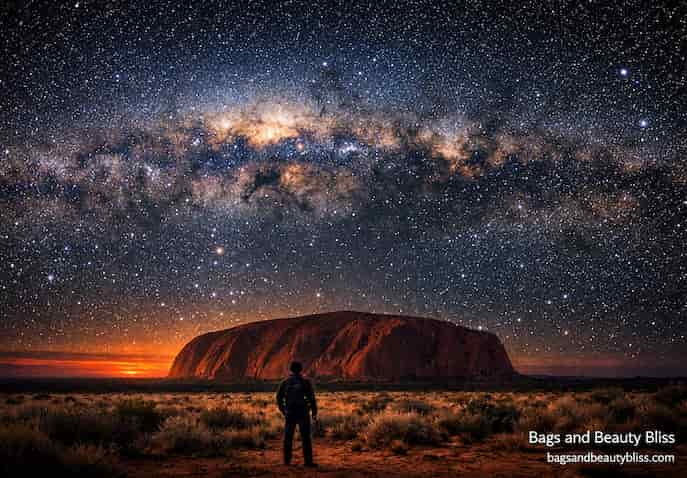
Traveler beneath the Milky Way at Uluru, embracing Australia’s desert night magic.
While Uluru is best known for its iconic sandstone monolith, it is also one of Australia’s most rewarding stargazing destinations. Its remote location and vast desert surroundings create exceptional night-sky viewing conditions.
Why Is It a Stargazing Delight?
Uluru offers:
- Exceptionally dark desert skies
- Minimal light pollution
- Outstanding visibility of constellations
- Clear desert air
- Stargazing experiences guided by local experts
- Opportunities to learn Indigenous astronomy traditions
- Beautiful desert landscapes under the stars
The combination of cultural significance and natural beauty makes stargazing here especially memorable.
Why Visit?
For thousands of years, Indigenous Australians have connected stories and traditions to the stars above Uluru. Many travelers find that experiences like this inspire greater confidence and independence, especially those considering solo travel for women over 40.
Best Time to Visit
- April to September offers pleasant temperatures
- Winter provides comfortable nighttime conditions
- Dry weather improves visibility
- New moon nights offer the darkest skies
7. Mauna Kea, Hawaii
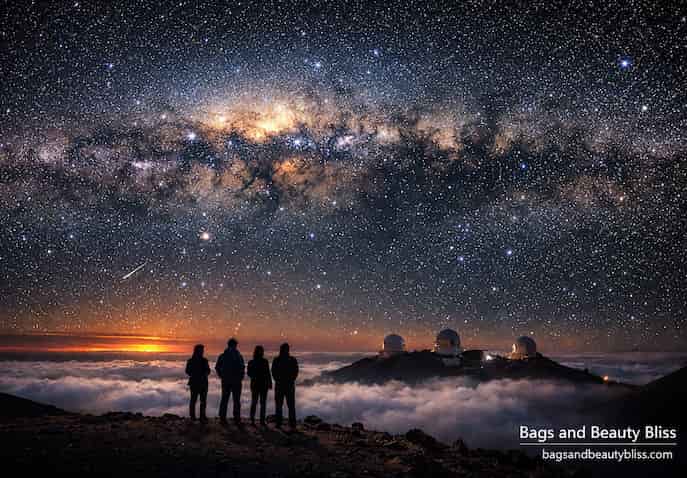
Visitors on Mauna Kea’s summit watch the Milky Way above Hawaii’s observatories.
Rising nearly 14,000 feet above sea level, Mauna Kea is one of the world’s most famous astronomical sites. Its elevation places visitors above much of the atmosphere, creating extraordinary viewing conditions.
Why Is It a Stargazing Delight?
Mauna Kea is renowned for:
- High-altitude viewing conditions
- Exceptional atmospheric clarity
- World-class observatories
- Outstanding visibility of stars and planets
- Minimal atmospheric interference
- Some of the best astronomical conditions on Earth
- Incredible views above the clouds
Few places offer such a dramatic perspective of the night sky.
Why Visit?
Standing above the clouds beneath a sky crowded with stars creates a profound sense of perspective. Many travelers leave with a renewed appreciation for both the vastness of the universe and the beauty of our own planet.
If mysterious destinations fascinate you, you might also enjoy our guide to Haunted Castles You Can Visit This Halloween, where history and atmosphere create equally unforgettable experiences.
Best Time to Visit
- Year-round stargazing opportunities
- Dry season generally offers better visibility
- New moon nights provide optimal conditions
- Sunset visits allow travelers to experience both day and night views of the summit
Why Stargazing Feels So Emotionally Healing?
The growing popularity of wellness travel, mindful travel experiences, and nature-based tourism isn’t a coincidence. For many people, these journeys become part of a broader healing process, similar to the experiences shared in solo travel after heartbreak. In a world filled with screens, notifications, and constant stimulation, dark-sky destinations offer something many of us rarely experience: stillness.
How Stargazing Helps
- Encourages you to slow down and be present
- Provides a break from screens and daily distractions
- Creates a sense of perspective that can make worries feel smaller
- Combines the calming effects of nature with quiet reflection
- Reconnects you with a sense of wonder often lost in busy everyday life
The best part? You don’t need a telescope or astronomy knowledge to enjoy it. Sometimes, simply standing beneath a sky full of stars is enough.
Best Time to Visit Stargazing Destinations
For the best experience:
- Plan trips around the new moon when skies are darkest.
- Avoid destinations during rainy or heavily clouded seasons.
- Visit remote areas with minimal light pollution.
- Allow your eyes 20–30 minutes to adjust to darkness.
- Consider traveling during local winter or dry seasons for clearer visibility.
Checking lunar calendars before booking can dramatically improve your stargazing experience. A well-planned packing strategy can also make remote stargazing trips more comfortable, especially if you’re choosing luggage using this smart luggage buying guide.
Final Thoughts
The best stargazing places in the world offer far more than beautiful photographs. They remind us of something many adults forget in the rush of everyday life: wonder still exists.
Whether you’re standing in the deserts of Namibia, beneath the northern skies of Iceland, or gazing at the Milky Way from Ladakh, the stars have a remarkable way of slowing us down. They invite us to look up, breathe deeply, and remember that the world is far bigger—and often far more beautiful—than our daily routines allow us to see.
Whether you’re chasing dark skies, wellness escapes, or nature-filled adventures, don’t forget to pack wisely with the ultimate summer travel beauty packing list if your journey includes warm-weather destinations.
Sometimes the most meaningful journeys aren’t the ones that keep us busy. They’re the ones that encourage us to stop, look skyward, and simply be present for a while. And perhaps that’s why so many travelers remember the feeling long after they’ve forgotten the exact constellation they saw.
Frequently Asked Questions
1.What is the best stargazing place in the world?
Many experts consider Lake Tekapo in New Zealand, the Atacama Desert in Chile, and the Namib Desert in Namibia among the best stargazing locations due to their exceptionally dark skies and low light pollution.
2. When is the best time of year for stargazing?
The best time is usually during a new moon when the sky is darkest. Dry seasons and clear winter nights also tend to provide better visibility.
3. Can you see the Milky Way without a telescope?
Yes. In many dark-sky destinations such as Hanle, Atacama, and Lake Tekapo, the Milky Way is often visible to the naked eye under favorable conditions.
4. Why does stargazing feel relaxing?
Stargazing encourages mindfulness, reduces sensory overload, and provides perspective. Many people find that looking at the vastness of the night sky helps quiet racing thoughts and reduce stress.
5. Which stargazing destinations are best for solo travelers?
Lake Tekapo, Iceland, and Hanle are particularly appealing for solo travelers because they combine beautiful natural scenery with opportunities for reflection, photography, and peaceful exploration.
6. What should I pack for a stargazing trip?
Bring warm layers, a red-light flashlight, a blanket or reclining chair, snacks, water, and a stargazing app (download it offline!). Binoculars are great, but not required. Don’t forget insect repellent and any medications.
7. I’m a beginner—do I need a telescope?
Not at all! The naked eye is perfect for spotting constellations and meteor showers. Use free apps like SkyView or Star Walk 2 to guide you. Local tours can make your experience even better.
8. How does the moon phase affect stargazing?
A full moon can wash out the stars. For optimal visibility, plan your observations around the New Moon. If that’s not possible, stargaze before moonrise or after moonset for darker skies.
9. What weather should I check before I go?
Look for clear skies, low humidity, and calm winds. Stable air means sharper views. Use apps like Windy or Clear Outside for detailed forecasts. Always have a backup night planned.
10. How can I stargaze responsibly?
Use red lights, keep phone screens dim, and leave no trace. Support eco-conscious stays and Dark Sky Places. Share awareness about light pollution and protect the beauty of the night sky.